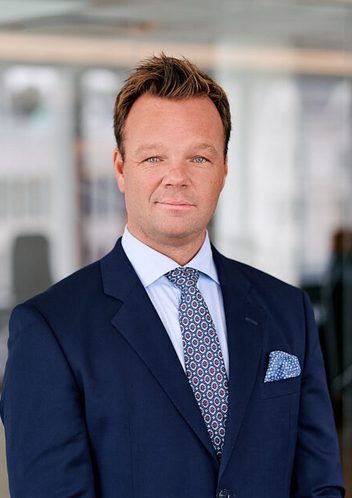
Sebastian Sundberg
Partner
Stockholm
Norway, Sweden, Denmark
by Sebastian Sundberg, Klaus Henrik Wiese-Hansen and Gustav Weismann Lund
Published:
These results are unprecedented, and Sweden's CASP applications stand out from a Scandinavian perspective as well. In Denmark, seven CASP applications have been approved by the Danish FSA and three have been rejected (to our knowledge). In Norway, the picture is even more favorable, with six CASP applications approved by the Norwegian FSA and none rejected (to our knowledge).
There is no obvious explanation for this discrepancy, but it is clear that the Swedish FSA has taken a far more restrictive approach than its regulatory peers in Denmark and Norway. For many CASPs, the DORA framework has proven one of the most challenging requirements to meet – but this holds true across all three Scandinavian countries, not just Sweden. It also seems unlikely that the maturity of applicants or the quality of applications would differ so significantly between the countries. So why are CASP applications treated so differently by the Scandinavian regulators?
It should be noted that the Swedish FSA has taken a notably conservative stance on crypto-assets more broadly. In a joint opinion piece with the Swedish Environmental Protection Agency in November 2021, the Swedish FSA argued that the EU should investigate banning energy-intensive crypto mining methods, including the Proof of Work protocol used to mine Bitcoin and Ethereum. On several occasions, the Swedish FSA has also stated that crypto-assets carry heightened risks in relation to money laundering, terrorist financing, and fraud.
While MiCA introduces a regulatory framework for certain crypto-assets, the Swedish FSA has emphasised that this does not make crypto-assets inherently safe, and that consumer protection under MiCA remains weaker than under other financial regulation, such as MiFID for financial instruments. According to the Swedish FSA, crypto-assets are, and will remain, a high-risk product, and it has repeatedly stressed the importance of consumers understanding these risks before investing.
That said, the Norwegian and Danish FSAs have issued similar warnings about the risks crypto-assets pose, so a difference in regulatory tone alone does not fully explain the gap in approval rates.
It is difficult to pinpoint a single reason for why CASP application outcomes differ so markedly between these countries. What is clear is that applying for a MiCA license in Sweden currently carries a materially higher risk of rejection than in Denmark or Norway. This puts applicants in a difficult position and may well be a factor worth weighing when deciding where to establish a crypto business.
It also underscores the importance of engaging skilled legal counsel early in the process. Please do not hesitate to contact us at Schjødt if you would like to know more about crypto, MiCA, and how we can help. Our teams in Sweden, Norway and Denmark have handled a significant amount of work relating to MiCA during the last year and is most likely the most experienced legal teams in Scandinavia in this respect.