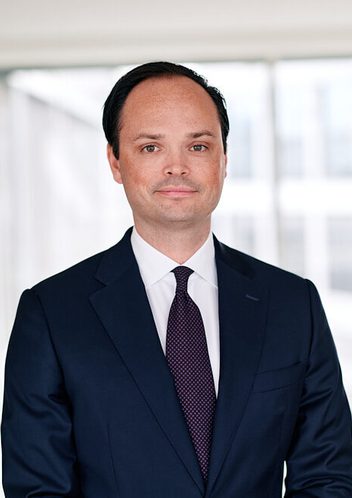

Frederik Dahlstrøm
Associate
Copenhagen
Denmark
by Frederik Dahlstrøm and Malene Overgaard
Published:
Denmark does not currently impose a wealth tax other than the property value tax on real estate. This may, however, change in the near future. On 24 March 2026, a parliamentary election was held. In the election campaign, the reintroduction of a wealth tax has been a central political issue, and as of today it is still unclear whether this will be reintroduced in the Danish tax system.
The election on 24 March produced a moderate result for the Social Democrats but still gave the Social Democrats and other parties on the left wing a rather strong election. The composition of the new government remains uncertain at this stage where neither the political right nor left wing can form a parliamentary majority without including the Moderates. Whether a wealth tax will ultimately be introduced now the left wing needs the Moderates who generally are against the introduction of wealth tax – and if so, whether in the form proposed by the Social Democrats or a modified version – therefore remains an open question. It will depend on the outcome of the ongoing government formation negotiations that are taking place now. How long this will take is uncertain.
In the following, we have reviewed and commented on the aspects of the wealth tax proposal(s) that were introduced during the election campaign, should it become relevant.
In connection with the election campaign, the Social Democrats put forward a proposal for the introduction of an annual wealth tax of 0.5% on net wealth exceeding DKK 25 million per person. For married couples, a combined threshold of DKK 50 million is proposed.
Under the proposal taxable wealth will comprise financial assets, including bank deposits, equity in real estate, the value of businesses, and pension assets.
According to the party's calculations, an individual with a net wealth of DKK 30 million will be required to pay wealth tax on DKK 5 million, corresponding to an annual tax of DKK 25,000. For a married couple with a combined net wealth of DKK 500 million, the annual wealth tax could amount to DKK 2.25 million.
It is proposed, however, that wealth tax shall not be payable on the first DKK 10 million (DKK 20 million for couples) of equity in one's primary residence.
According to the Social Democrats' own calculations, the proposal will affect approximately 20,000 individuals – a figure that is slightly lower than the initially cited 22,000, as the equity exemption in real estate reduces the number of persons crossing the taxable threshold.
One of the more technically complex aspects of the proposed wealth tax, and one which has given rise to several discussions, concerns the valuation of unlisted shares — i.e. ownership stakes in companies that are not traded on a stock exchange. Since such shares have no readily observable market price, the question of how such value should be calculated becomes highly relevant.
Under the proposal, the valuation of unlisted shares takes equity (book value) as its starting point, but the methodology is more nuanced than a direct application of the balance sheet figure. The Ministry of Taxation's calculations, which form the basis for the proposal, are based on an estimated market value derived by applying a price-to-book (P/B) ratio. This ratio reflects how much higher the market value of comparable listed companies is relative to their equity. The P/B ratio used is that of the fourth quarter of 2024, which stood at 1.44. Since unlisted shares are less liquid than listed ones and cannot be freely traded, a discount of 10% is applied, resulting in an adjusted P/B factor of 1.296. Accordingly, a company with equity of DKK 20 million would be assigned a calculated value of DKK 25.92 million for wealth tax purposes.
The Ministry of Taxation estimates that the proposed wealth tax would generate additional annual revenues of DKK 7.1 billion from 2028 onwards, based on the proposed rate and threshold.
These estimates carry considerable uncertainty, however. If unlisted shares are valued solely at equity without applying the P/B adjustment, revenue is estimated to fall by approximately DKK 1.4 billion.
Opponents of the proposal have flagged a potentially more significant source of uncertainty that relates to behavioural responses of taxpayers. It is suggested that taxpayers may alter their financial arrangements in response to the wealth tax, for instance by restructuring assets or changing investment patterns, in ways that reduce the effective tax base. Furthermore, it has been raised that the Social Democrats when asked cannot explain what is exactly meant with the valuation of unlisted shares taking equity (book value) as "its starting point", and certain extreme examples of who the wealth tax will be relevant for has been shown.
Economists have noted that the effects are not fully captured in the headline revenue estimate, and some assessments suggest that the actual revenue collected over time could be substantially lower than the initial projections.
The proposal for a wealth tax is supported to varying degrees by several parties on the political left wing. The Socialist People's Party ("SF") has, for example, proposed a model under which wealth exceeding DKK 10 million will be taxed at 0.5%. The party has estimated that such a model will generate revenue of approximately DKK 9.3 billion annually.
The Red-Green Alliance (Da. "Enhedslisten") has likewise put forward proposals for a wealth tax, including a model with a rate of 1% on wealth exceeding DKK 35 million.
At the same time, the proposals face considerable political opposition. Liberal Alliance has, among other things, argued that a wealth tax may have adverse effects on investment, entrepreneurship, and capital formation. The Moderates have also expressed scepticism towards a reintroduction of a wealth tax in Denmark.
The debate over wealth tax has been one of the most central battles of the 2026 election campaign. The Social Democrats, SF and the Red-Green Alliance support some form of wealth tax, albeit with varying levels of ambition. The Social Democrats have indicated that following an election, the party will discuss the proposal with the business community, entrepreneurs and other parties in order to determine precisely how the wealth tax should be structured. The more liberal parties and major business organisations are strongly warning against the economic consequences.
A potential introduction of a wealth tax would raise a number of practical and legal questions. These relate, among other things, to the interaction with the existing taxation of capital income, share income, and pension savings.
In addition, questions arise regarding the individual's financing of this dry tax, as a wealth tax must potentially be paid regardless of whether the assets generate an actual return.
As the post-election landscape takes shape, the precise design, scope and ultimate fate of any wealth tax reform remain to be seen – we are monitoring developments closely.